LODZ – AN UNUSUAL CITY
Welcome to Lodz, the second biggest
city of Poland - the country of an exceptional location in Europe - situated in its center
it has bridged the West and the East for centuries.
Lodz has a particular location in Poland
– next to its northern border there’s the geometrical midpoint of the country. The
city is known for the interesting configuration of the land, rich history, well developed
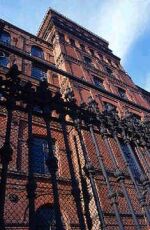
science and multiple cultural offers. The industrial settlements of Lodz contain
Poland’s unique and most interesting complexes of 19th and 20th century architecture.
Some history
The Lodz Upland lies on the territory
shaped by the glacier. The hilly terrain is full of stream sources and this, probably,
gave the origin of the city’s name which means „The Boat”.
The name Lodz appeared for the first time
in a document of 1332. The municipal rights did not influence the character and look of
the farming and craftsmanship town. An unexpected decision of the authorities of the
Polish Kingdom of 1820 to include Lodz in the cluster of industrial settlements opened a
new opportunity to develop. Borders of textile establishments were demarcated and
connected with the most important street of Lodz – Piotrkowska. Significant conveniences
attracted impoverished weavers from all Europe. In 80 years Lodz was transformed from a
small town to an industrial metropolis of 500.000 inhabitants, which was a world record of
demographic growth. This was driven by the textile industry. The beginning was hand
weaving and spinning machines, from 1839 replaced by automated factories which turned into
big joint stock companies late in the 19th century. The 19th century Lodz was a
multinational ciy: Poles, Germans, Jews, Russians and Czechs migrated here as to the
“promised land”, brilliantly filmed by Andrzej Wajda, an Oscar winning Polish
director. The newcomers were of diverse origin, customs, language and religion. What they
had in common was their place of abode and, first of all their occupation. Although they
passed one another in the same streets, crossed the same factory gates and took loans in
the same banks, they formed closed communities which created their own schools, temples,
cemetaries, theatres, sports clubs, etc. Their traces are still visible in the
contemporary city.
World War I brought a decline of the
industry devastated by the German invaders. During the interwar period the city tried to
regain its rank; industry was rebuilt, education and culture developed, and the streets
became more beautiful.
Unfortunately, the following Nazi invasion
of 1939 brought new degradation and destruction. Over 200 persons were murdered in the
local Jewish ghetto and thousands of Poles and Jews perished in mass executions,
concentration camps and prisons. The liberation of 1945 gave the city another chance to
revive schools and higher education, new theatres and museums came into being, the
structure of the industry was changed, and new settlements were built in the suburbs.
Today the city has 820.000 inhabitants and occupies an area of 300 square km.
The city’s advantages
After the decades of stagnation and
neglect under the communist government Lodz, burdened by the industrial stigma of the
“gray Polish Manchester”, started to recover and enhance its magical image. Lots of
deteriorating historic buildings have been renovated, the roads modernized, many new
initiatives originated. Contemporary Lodz is no longer gray with its 30 parks, abundant in
greenness and exotic, rare trees and bushes as well as Europe’s largest city forest with
baroque churches, recreational center and tourist trails. In the housing spaces all over
the city modern colorful apartment blocks were built.
An opportunity to commune with the
history enclosed in the 19th century areas of industrial architecture left the unique
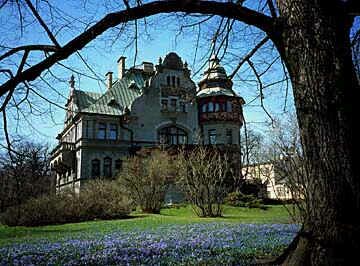
heritage of large complexes of factory owners’ settlements. For example, K.Scheibler
built the world’s largest cotton mill, palaces, a grange, a hospital, shops, schools, a
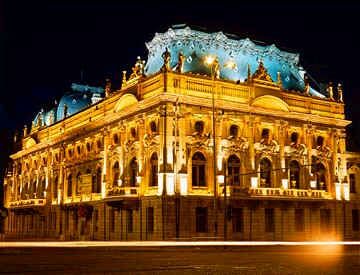
railway station, a power plant. A similar complex of Israel Poznanski’s architecture
comprises a factory, 3 palaces (including one largest in Europe), laborers’ houses, etc.
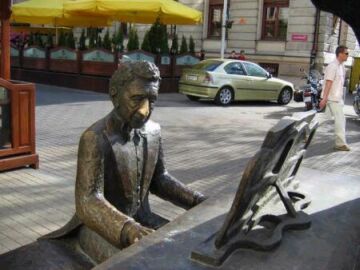
Today, the palaces are open for tourists as museums with salons of unrivaled beauty and
remembrances of such artists as e.g. Arthur Rubinstein. The museums of world fame also
include the Central Museum of Textile industry created in a factory of 1835. The city is
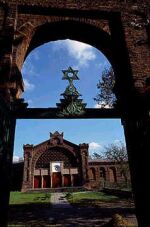
also famous for unusual historic cemeteries of various religions and artistic tombs,
including the unparalleled in Europe Jewish cemetery.
 |
Lodz, sometimes humorously called
„Hollylodz”, is the largest center of film production in Poland (David Lynch,
fascinated by the city’s ambience currently builds here a movie making establishment).
Lodz is also a host of many international festivals like e.g. CAMERIMAGE, EXPLORERS
FESTIVAL, MEDIATRAVEL, EUROPEAN FILM FORUM.
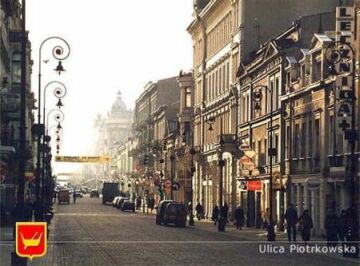 |
Another attraction is Piotrkowska Street
where the city’s life concentrates - a favourite place for open-air events, happenings
and competitions – and, what’s most important, a specific symbol of the transition of
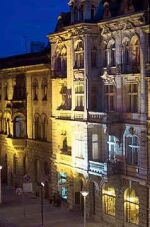
Lodz and eclectic beauty of the city. There’s no such street and no such scenery
elsewhere in Poland. It’s a 5 km long survey of styles and architectural fashions which
found here their fullest expression. The street and its surroundings host numerous
exquisite Art. Nouveaux houses as well as hundreds of shops and pubs. Among other styles
represented here you can find the late gothic, Romanesque, Neo-Renaissance and
Neo-Baroque. There’re also several churches of various denominations, including a
magnificent neo-gothic cathedral. There’s no doubt that the main street of Lodz is one
of the most complete and precious architectural complexes in Poland.